
Authored by the expert who managed and guided the team behind the South Africa Property Pack
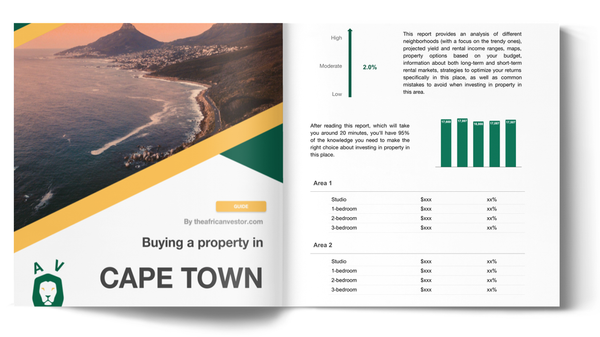
Yes, the analysis of Cape Town's property market is included in our pack
Cape Town's property market in 2026 remains South Africa's strongest performer, with prices up 141% since 2010 and the Western Cape recording the country's lowest vacancy rate at just 1.07%.
Whether you want beachfront luxury at R100,000 per square meter in Clifton or solid 8% rental yields in Observatory, Cape Town offers distinct investment opportunities across its many neighborhoods.
We constantly update this blog post with fresh data on Cape Town housing prices, rental trends, and neighborhood developments to help you make informed decisions.
And if you're planning to buy a property in this place, you may want to download our pack covering the real estate market in Cape Town.
What's the Current Real Estate Market Situation by Area in Cape Town?
Which areas in Cape Town have the highest property prices per square meter in 2026?
As of early 2026, Clifton, Camps Bay, and Bantry Bay are the three most expensive areas in Cape Town, with these Atlantic Seaboard neighborhoods commanding prices that can reach R95,000 to R130,000 per square meter for premium apartments.
The typical price range per square meter in these most expensive Cape Town neighborhoods runs from R55,000 to R130,000 for apartments and R40,000 to R105,000 for houses, depending on views, finishes, and proximity to the beach.
Each of these premium Cape Town neighborhoods commands high prices for different specific reasons:
- Clifton: Only four sheltered beaches, near-zero buildable land, and year-round protection from the Cape Doctor wind.
- Camps Bay: Direct beach access with mountain backdrop, walkable restaurants, and global brand recognition among tourists.
- Bantry Bay: North-facing sunset views, extreme privacy with no through-traffic, and proximity to Sea Point amenities.
- Fresnaye: Large plots with panoramic views, established gardens, and lower density than neighboring Sea Point.
Which areas in Cape Town have the most affordable property prices in 2026?
As of early 2026, Parklands, Sunningdale, and Table View offer the most affordable property prices per square meter in Cape Town for investors seeking lower entry points, with prices ranging from R16,000 to R35,000 per square meter.
The typical price range per square meter in these more affordable Cape Town areas sits between R16,000 and R40,000, with newer apartments in Table View at the higher end and older houses in Parklands at the lower end.
The main trade-off buyers should expect in these lower-priced Cape Town areas is longer commute times to the CBD (30 to 45 minutes) and a more car-dependent lifestyle, though Table View benefits from MyCiTi bus access and Parklands offers family-friendly security estates with good schools nearby.
Get fresh and reliable information about the market in Cape Town
Don't base significant investment decisions on outdated data. Get updated and accurate information.

Which Areas in Cape Town Offer the Best Rental Yields?
Which neighborhoods in Cape Town have the highest gross rental yields in 2026?
As of early 2026, Observatory, Upper Woodstock, Zonnebloem, and Table View deliver the highest gross rental yields in Cape Town, with Observatory reaching 7% to 10% for small units near UCT and Woodstock achieving 7% to 9% in renovated apartments.
The typical gross rental yield range for investment properties across Cape Town as a whole sits between 4% and 8%, with premium coastal areas like Clifton and Camps Bay yielding just 2.5% to 4.5% while emerging neighborhoods consistently outperform.
Each of these high-yielding Cape Town neighborhoods delivers stronger returns for specific reasons:
- Observatory: Constant student demand from UCT, low vacancy (under 2%), and affordable purchase prices create strong yield math.
- Upper Woodstock: Gentrification premiums on rents outpacing purchase price growth, plus creative industry tenant demand.
- Zonnebloem: CBD-adjacent location at half the price of Sea Point, attracting young professionals willing to pay city rents.
- Table View: MyCiTi bus access and beach lifestyle at Northern Suburb prices create rental demand from remote workers.
Get to know the market before buying a property in Cape Town
Better information leads to better decisions. Get all the data you need before investing a large amount of money.
Which Areas in Cape Town Are Best for Short-Term Vacation Rentals?
Which neighborhoods in Cape Town perform best on Airbnb in 2026?
As of early 2026, Sea Point, Green Point, the City Bowl (including Gardens and Tamboerskloof), and De Waterkant perform best on Airbnb in Cape Town, with occupancy rates reaching 71% to 75% and average daily rates of R1,600 to R2,900.
The typical monthly revenue range that top-performing Airbnb properties generate in these Cape Town neighborhoods sits between R30,000 and R47,000 for well-managed one-bedroom units, with professionally optimized properties in peak season (December to February) exceeding R60,000 monthly.
Each of these high-performing Cape Town Airbnb neighborhoods outperforms for specific reasons:
- Sea Point: Year-round promenade appeal, dense restaurant scene, and reliable demand from both tourists and business travelers.
- Green Point: V&A Waterfront proximity, stadium events, and walkability to cafes create consistent weekend bookings.
- City Bowl (Gardens/Tamboerskloof): Kloof Street lifestyle strip, Table Mountain access, and corporate lets from CBD proximity.
- De Waterkant: 24/7 security patrols, cobbled streets aesthetic, and strong LGBTQ+ tourism market create premium nightly rates.
Which tourist areas in Cape Town are becoming oversaturated with short-term rentals?
The Cape Town CBD (City Centre), mid-block Sea Point apartments away from the promenade, and certain Green Point apartment clusters are the three areas showing the clearest signs of short-term rental oversaturation as of early 2026.
The approximate density of active short-term rental listings in these oversaturated Cape Town areas is significant, with the City Bowl alone hosting over 4,900 active Airbnb listings and citywide active listings reaching approximately 19,500 to 27,500 depending on the data source.
The main sign that these Cape Town areas have reached oversaturation is the "race-to-the-bottom" pricing for standard one-bedroom units, where similar apartments compete heavily on price rather than differentiation, pushing occupancy for average properties down to 47% or below while top performers still achieve 75% or more.
Make a profitable investment in Cape Town
Better information leads to better decisions. Save time and money. Download our data.
Which Areas in Cape Town Are Best for Long-Term Rentals?
Which neighborhoods in Cape Town have the strongest demand for long-term tenants?
Claremont, Rondebosch, Sea Point, and Observatory have the strongest demand for long-term tenants in Cape Town, driven by proximity to UCT, excellent schools, and reliable public transport connections.
The typical vacancy rate in these high-demand Cape Town neighborhoods sits well below 2%, with Observatory and student-focused areas achieving occupancy rates up to 98% and the Western Cape as a whole recording a record-low vacancy rate of just 1.07% in late 2024.
Each of these Cape Town neighborhoods attracts a specific tenant profile:
- Claremont: Professionals working at Cavendish Square offices and families seeking Southern Suburb school access.
- Rondebosch: UCT academics, postgraduate students, and families in the "Golden Mile" school catchment area.
- Sea Point: Corporate transferees, semigrants from Johannesburg, and international remote workers on long stays.
- Observatory: UCT and CPUT students, young professionals in creative industries, and budget-conscious expats.
The key amenity that makes these Cape Town neighborhoods attractive to long-term tenants is reliable public transport, whether MyCiTi buses in Sea Point, train access in Claremont and Rondebosch, or walkability to campus in Observatory.
Finally, please note that we provide a very granular rental analysis in our property pack about Cape Town.
What are the average long-term monthly rents by neighborhood in Cape Town in 2026?
As of early 2026, average long-term monthly rents in Cape Town range from R7,000 to R22,000 for one-bedroom apartments depending on neighborhood, with Sea Point and Green Point at the premium end and Parklands at the affordable end.
The typical rent range for entry-level apartments in the most affordable Cape Town neighborhoods like Parklands and parts of Table View sits between R7,000 and R14,000 per month for a decent one-bedroom unit with security.
The typical rent range for mid-range apartments in average-priced Cape Town neighborhoods like Claremont, Rondebosch, and Observatory falls between R11,000 and R22,000 per month for one-bedroom units, depending on building quality and parking availability.
The typical rent range for high-end apartments in the most expensive Cape Town neighborhoods like Sea Point, Green Point, and the City Bowl sits between R15,000 and R38,000 per month for quality one and two-bedroom units, with luxury penthouses and three-bedroom houses reaching R45,000 to R75,000 monthly.
Don't buy the wrong property, in the wrong area of Cape Town
Buying real estate is a significant investment. Don't rely solely on your intuition. Gather the right information to make the best decision.
Which Are the Up-and-Coming Areas to Invest in Cape Town?
Which neighborhoods in Cape Town are gentrifying and attracting new investors in 2026?
As of early 2026, Upper Woodstock, Salt River, Observatory, and Wynberg Upper are the top Cape Town neighborhoods currently gentrifying and attracting new investors, with visible renovation activity, new cafes, and rising transaction volumes from younger buyers.
The typical annual price appreciation rate these gentrifying Cape Town neighborhoods have experienced recently ranges from 6% to 8%, outperforming the citywide average of 4% to 5% as investor capital flows into renovated loft apartments and converted industrial spaces.
Which areas in Cape Town have major infrastructure projects planned that will boost prices?
Claremont, Wynberg, and the suburbs along the Lansdowne-Khayelitsha corridor have major infrastructure projects planned that are expected to boost Cape Town property prices as the MyCiTi Phase 2A expansion connects these areas to new commuter flows.
The specific infrastructure project underway is the MyCiTi Phase 2A bus rapid transit expansion, a R6+ billion project linking Khayelitsha and Mitchells Plain to Claremont and Wynberg via dedicated bus lanes, with construction ongoing in Claremont as of early 2026 and completion expected by late 2027.
The typical price increase historically seen in Cape Town areas after major infrastructure projects are completed ranges from 5% to 15% within two to three years of service launch, as improved accessibility attracts new tenants and reduces commute friction for existing residents.

We made this infographic to show you how property prices in South Africa compare to other big cities across the region. It breaks down the average price per square meter in city centers, so you can see how cities stack up. It’s an easy way to spot where you might get the best value for your money. We hope you like it.
Which Areas in Cape Town Should I Avoid as a Property Investor?
Which neighborhoods in Cape Town with lots of problems I should avoid and why?
For foreign investors without local operating capability, many areas on the Cape Flats including Nyanga, Philippi East, Delft, Mfuleni, Manenberg, and Bonteheuwel present significant challenges due to high violent crime rates and infrastructure constraints.
Each of these problematic Cape Town areas faces specific issues:
- Nyanga: One of South Africa's highest murder rates, gang activity, and limited resale liquidity for outside investors.
- Philippi East: Sharp increase in violent crime in 2025, poor service delivery, and insurance difficulties for landlords.
- Delft: Gang violence, high property crime, and tenanting challenges despite relatively low purchase prices.
- Industrial-edge Salt River/Woodstock: Block-by-block variation where a good street sits 400 meters from a very tough one.
For any of these Cape Town neighborhoods to become viable investment options, they would need sustained reductions in violent crime (currently tracking at 668 murders on the Cape Flats between January and March 2025 alone), improved policing resources, and significant investment in infrastructure and service delivery.
Which areas in Cape Town have stagnant or declining property prices as of 2026?
As of early 2026, high-supply new-build corridors in parts of Parklands, certain CBD/Foreshore investor apartment clusters, and outlying areas with long commutes are the most likely Cape Town areas to experience stagnant or underperforming property prices relative to the metro average.
The approximate stagnation rate these Cape Town areas have experienced is growth of 1% to 3% annually, which means they are underperforming the citywide average of 4% to 5% and losing ground to inflation-adjusted returns.
Each of these underperforming Cape Town areas faces specific headwinds:
- Parklands new-build pockets: Heavy supply of similar townhouses creates competition that caps price growth.
- CBD/Foreshore investor buildings: Oversaturated short-term rental market and commoditized one-bed product.
- Far Northern Suburbs: Rising commuting costs (fuel, time) without offsetting price discounts erode demand.
Get the full checklist for your due diligence in Cape Town
Don't repeat the same mistakes others have made before you. Make sure everything is in order before signing your sales contract.

Which Areas in Cape Town Have the Best Long-Term Appreciation Potential?
Which areas in Cape Town have historically appreciated the most recently?
Sea Point, Green Point, Gardens/Oranjezicht, and Camps Bay are the four Cape Town areas that have historically appreciated the most over the past five to ten years, driven by constrained supply and strong demand from both local and international buyers.
Each of these top-performing Cape Town areas has achieved specific appreciation levels:
- Sea Point: Annual growth of 5% to 8% over the past five years, benefiting from promenade lifestyle and semigration demand.
- Green Point: Similar 5% to 7% annual appreciation, driven by Waterfront proximity and MyCiTi bus connectivity.
- Gardens/Oranjezicht: 6% to 8% annual growth as City Bowl scarcity and Kloof Street lifestyle attract young professionals.
- Camps Bay: 5% to 10% annual appreciation for premium properties, though more volatile with international buyer cycles.
The main driver that caused above-average appreciation in these Cape Town areas is the combination of severe supply constraints (near-zero developable land), strong lifestyle demand (walkability, views, beaches), and semigration inflows from other provinces seeking Cape Town quality of life.
By the way, you will find much more detailed trends and forecasts in our pack covering everything there is to know about buying a property in Cape Town.
Which neighborhoods in Cape Town are expected to see price growth in coming years?
Wynberg Upper, Claremont fringe pockets, Observatory, and Upper Woodstock are the four Cape Town neighborhoods expected to see the strongest price growth in the coming years based on infrastructure catalysts and demand fundamentals.
Each of these high-potential Cape Town neighborhoods has projected growth drivers:
- Wynberg Upper: 6% to 8% projected annual growth as MyCiTi Phase 2A improves connectivity to the CBD and Southern Suburbs.
- Claremont fringe: 5% to 7% projected growth from transport spine improvements and spillover from premium Claremont core.
- Observatory: 6% to 8% projected growth from sustained student demand, yield-seeking investors, and creative sector growth.
- Upper Woodstock: 7% to 10% projected growth in well-selected micro-locations as gentrification matures and crime improves.
The single most important catalyst expected to drive future price growth in these Cape Town neighborhoods is improved public transport connectivity, particularly the MyCiTi Phase 2A expansion linking the metro southeast to employment nodes in Claremont and Wynberg.
We made this infographic to show you how property prices in South Africa compare to other big cities across the region. It breaks down the average price per square meter in city centers, so you can see how cities stack up. It’s an easy way to spot where you might get the best value for your money. We hope you like it.
What Do Locals and Expats Really Think About Different Areas in Cape Town?
Which areas in Cape Town do local residents consider the most desirable to live?
Newlands, Rondebosch, Bishopscourt (for families), Gardens, Oranjezicht, and Vredehoek (for professionals), and Green Point and Sea Point (for urban lifestyle) are the areas Cape Town local residents consistently consider the most desirable to live.
Each of these locally-preferred Cape Town areas offers specific qualities:
- Newlands: Leafy streets, proximity to Newlands Forest, excellent schools, and a village-like community feel.
- Rondebosch: UCT proximity, "Golden Mile" school catchment, and established infrastructure with mature trees.
- Gardens/Oranjezicht: Walkability to Kloof Street restaurants, mountain access, and City Bowl convenience.
- Sea Point: Promenade lifestyle, diverse dining options, and dense services for car-free living.
The demographic that typically lives in these locally-preferred Cape Town areas includes established professionals, young families with school-age children (Southern Suburbs), young professionals and couples (City Bowl), and a mix of retirees and remote workers (Atlantic Seaboard).
Local preferences in Cape Town largely align with what foreign investors target for the City Bowl and Atlantic Seaboard, but diverge for the Southern Suburbs where locals prioritize schools and community while foreigners often overlook these family-oriented neighborhoods in favor of beachfront locations.
Which neighborhoods in Cape Town have the best reputation among expat communities?
Sea Point, Green Point, De Waterkant, Gardens/Tamboerskloof, and Muizenberg/Kalk Bay have the best reputation among expat communities in Cape Town, with these areas offering walkability, safety, and established international networks.
Expats prefer these Cape Town neighborhoods for specific reasons:
- Sea Point: Walkable to everything, safe for evening strolls, vibrant cafe culture, and easy Uber access.
- Green Point: Central location, V&A Waterfront proximity, and quieter residential feel than Sea Point.
- De Waterkant: 24/7 security patrols, design-forward aesthetic, LGBTQ+ friendly, and boutique charm.
- Muizenberg/Kalk Bay: Surf community lifestyle, slower pace, and affordable alternative to Atlantic Seaboard.
The expat profile most commonly found in these popular Cape Town neighborhoods includes digital nomads and remote workers (Sea Point, Green Point), retirees from Europe and the UK (Camps Bay, Hout Bay), young professionals on corporate assignments (City Bowl), and creative/surf-focused expats (Muizenberg).
Which areas in Cape Town do locals say are overhyped by foreign buyers?
Clifton, Camps Bay, and some CBD/Foreshore investor apartment buildings are the three Cape Town areas that locals most commonly say are overhyped by foreign buyers who prioritize views and beaches over value fundamentals.
Locals believe these Cape Town areas are overvalued for specific reasons:
- Clifton: Yields of 2.5% to 4% make no investment sense; prices driven by trophy-asset psychology rather than rental math.
- Camps Bay: Seasonal demand, parking nightmares, and limited daily amenities relative to prices charged.
- CBD Foreshore: Commoditized investor stock with heavy Airbnb competition and minimal neighborhood character.
Foreign buyers typically see spectacular ocean views, global brand recognition, and resale potential to other wealthy internationals in these areas, while locals who actually need to live, commute, and run daily errands often find more value in less glamorous neighborhoods with better lifestyle infrastructure.
Which areas in Cape Town are considered boring or undesirable by residents?
Parklands, parts of Sunningdale, and some far Northern Suburb developments are the Cape Town areas that residents most commonly consider boring or undesirable for lifestyle purposes, though they can still offer solid investment returns if the yield math works.
Residents find these Cape Town areas boring for specific reasons:
- Parklands: Car-dependent suburbia with similar-looking houses, minimal walkable amenities, and no neighborhood center.
- Parts of Sunningdale: Quiet family estates that are great for kids but offer no evening entertainment or urban energy.
- Far Northern Suburbs: Long commutes (45+ minutes to CBD), limited public transport, and strip-mall retail culture.
Don't lose money on your property in Cape Town
100% of people who have lost money there have spent less than 1 hour researching the market. We have reviewed everything there is to know. Grab our guide now.
What sources have we used to write this blog article?
Whether it's in our blog articles or the market analyses included in our property pack about Cape Town, we always rely on the strongest methodology we can, and we don't throw out numbers at random.
We also aim to be fully transparent, so below we've listed the authoritative sources we used, and explained how we used them and the methods behind our estimates.
| Source | Why It's Authoritative | How We Used It |
|---|---|---|
| Statistics South Africa (RPPI) | Official national statistics agency with IMF-supported methodology. | We used it to anchor Cape Town vs South Africa price inflation. We applied Western Cape adjustments to neighborhood price estimates. |
| PayProp Rental Index | Processes large transaction volumes with a long-running index. | We used it to anchor rental growth and city rent trends. We applied macro rent inflation adjustments to neighborhood estimates. |
| TPN Residential Rental Monitor | Major rental-data provider with widely cited quarterly reports. | We used it to assess tenant payment quality and vacancy rates. We supported claims about Western Cape rental demand strength. |
| FNB Property Barometer | Major bank research unit with consistent macro property views. | We used it to contextualize why Western Cape leads price growth. We avoided treating Cape Town as purely a tourism story. |
| AirDNA | Widely-used, methodology-forward STR analytics provider. | We used it to anchor citywide Airbnb occupancy and ADR levels. We converted neighborhood saturation signals into yield implications. |
| Inside Airbnb | Independent open-data project used by researchers worldwide. | We used it to identify STR oversaturation risk by neighborhood. We complemented paid-provider data with listing concentration views. |
| MyCiTi Bus Expansion Plans | City of Cape Town official transport expansion documentation. | We used it to identify corridors benefiting from improved connectivity. We provided infrastructure catalyst evidence for up-and-coming areas. |
| SAPS Crime Statistics | Official publisher of police-recorded crime statistics nationally. | We used it to anchor our "avoid" discussion in official crime data. We guided readers to precinct-level verification. |
| Property24 | One of South Africa's largest property portals with suburb data. | We used it as a suburb-level price proxy where official stats don't exist. We triangulated neighborhood rankings before applying RPPI adjustments. |
| Lightstone Property Data | Leading SA property-data firm cited by banks and agencies. | We used it to triangulate Western Cape outperformance claims. We cross-checked against Stats SA RPPI patterns. |
Get the full checklist for your due diligence in Cape Town
Don't repeat the same mistakes others have made before you. Make sure everything is in order before signing your sales contract.
