
As of June 2026, apartments in Abidjan usually cost between 90 million and 115 million FCFA for a realistic median purchase, but the real price depends heavily on the commune, the title status, the building quality, and whether the apartment is new or resale.
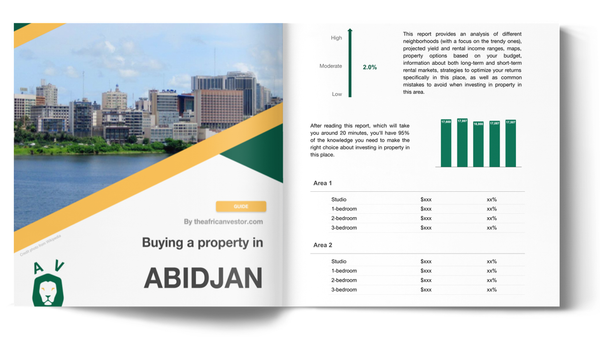
Get all the data you need about the real estate market in Abidjan
We constantly update this blog post so buyers can follow fresh apartment prices in Abidjan in 2026, not old numbers copied from outdated listings.
For a foreign buyer, the most important point is simple: Abidjan has affordable apartments, but clean paperwork and good building management matter as much as the price.
This guide focuses only on apartments in Abidjan, because villas, land and mixed-use buildings follow very different rules.
And if you’re planning to buy a property in this place, you may want to download our pack covering the real estate market in Abidjan.
Insights
- The median apartment asking price in Abidjan in June 2026 is around 100 million to 125 million FCFA, but a disciplined buyer should usually negotiate from that level.
- Apartment prices in Abidjan are very uneven: Yopougon can be near 230,000 FCFA per m², while Plateau or Riviera Golf can pass 1 million FCFA per m².
- The best value in Abidjan in 2026 is often not the cheapest apartment, but a clear-title two-bedroom in Angré, Riviera Faya, Palmeraie or Bingerville.
- Foreign buyers in Abidjan should plan for 30% to 40% down payment, because local banks often want strong equity and clean income documents.
- Closing costs in Abidjan can easily add 8% to 13% to the purchase price, before furniture, small repairs or bank fees.
- New-build apartments in Abidjan often cost 15% to 30% more than resale apartments, but a new apartment is not safer if the ACD status is unclear.
- Air conditioning is the hidden monthly cost in Abidjan apartments, because electricity can rise fast in large or poorly insulated units.
- Luxury apartment yields in Zone 4, Biétry and Riviera Golf can look attractive, but service charges, generator costs and furniture replacement can reduce net returns.
- For first-time buyers in Abidjan, Yopougon, Koumassi and Treichville are cheaper, while Angré and Riviera Faya offer a more balanced middle-market option.
How much do apartments really cost in Abidjan in 2026?
What's the average and median apartment price in Abidjan in 2026?
As of June 2026, the median apartment price in Abidjan is about 90 million to 115 million FCFA after negotiation, which is roughly $158,000 to $202,000 or €137,000 to €175,000, while the average apartment price in Abidjan is closer to 115 million to 140 million FCFA, or about $202,000 to $246,000 and €175,000 to €213,000.
In the same market, the typical apartment price per square meter in Abidjan is about 430,000 to 520,000 FCFA per m², or about $755 to $912 and €656 to €793 per m², which equals roughly 40,000 to 48,000 FCFA per sq ft, or about $70 to $85 and €61 to €73 per sq ft.
For most standard apartments in Abidjan in 2026, a realistic buying range is 35 million to 180 million FCFA, or about $61,000 to $316,000 and €53,000 to €274,000, with cheaper units in Yopougon, Koumassi and Treichville and expensive units in Zone 4, Plateau, Biétry and Riviera Golf.
Sources and methodology: we compared GoTerra, Agentiz and IvoireDomi listing evidence.
We treated asking prices as starting points, not final transaction prices.
We then applied our own neighborhood checks, title-risk discounts and buyer-cost analysis for Abidjan apartments.
How much is a studio apartment in Abidjan in 2026?
As of June 2026, a typical studio apartment in Abidjan costs about 14 million to 28 million FCFA, or roughly $25,000 to $49,000 and €21,000 to €43,000.
For a simple studio in Yopougon, Koumassi or Treichville, a buyer can still see 10 million to 18 million FCFA, or about $18,000 to $32,000 and €15,000 to €27,000, while a modern studio in Zone 4, Biétry, Deux-Plateaux, Riviera Golf or Plateau is more often 25 million to 45 million FCFA, or about $44,000 to $79,000 and €38,000 to €69,000.
Most studio apartments in Abidjan are about 25 m² to 45 m², with the smallest budget studios often below 30 m² and the better furnished-rental studios closer to 35 m² to 45 m².
Sources and methodology: we checked studio evidence from GoTerra, Agentiz apartment listings and Immo CI listing samples.
We separated budget studios from furnished-rental-grade studios.
We also adjusted for Abidjan micro-locations where a small unit can still be expensive.
How much is a one-bedroom apartment in Abidjan in 2026?
As of June 2026, a typical one-bedroom apartment in Abidjan costs about 25 million to 55 million FCFA, or roughly $44,000 to $96,000 and €38,000 to €84,000.
For entry-level to mid-range one-bedrooms in Yopougon, Koumassi, Treichville, Bingerville, Angré or Riviera Faya, a realistic range is 20 million to 60 million FCFA, or about $35,000 to $105,000 and €30,000 to €91,000, while high-end one-bedrooms in Zone 4, Plateau, Biétry and prime Cocody often sit around 50 million to 85 million FCFA, or about $88,000 to $149,000 and €76,000 to €130,000.
Most one-bedroom apartments in Abidjan are about 45 m² to 75 m², although some older units are larger and some new investor units are designed smaller.
Sources and methodology: we compared GoTerra, Agentiz and our own Abidjan apartment dataset.
We checked one-bedroom prices against neighborhood price-per-m² ranges.
We then corrected for listing inflation, weak documents and older building condition.
How much is a two-bedroom apartment in Abidjan in 2026?
As of June 2026, a typical two-bedroom apartment in Abidjan costs about 45 million to 95 million FCFA, or roughly $79,000 to $167,000 and €69,000 to €145,000.
For entry-level to mid-range two-bedrooms in Yopougon, Koumassi, Treichville, Angré, Riviera Faya, Palmeraie and Bingerville, a realistic range is 30 million to 90 million FCFA, or about $53,000 to $158,000 and €46,000 to €137,000, while high-end two-bedrooms in Zone 4, Biétry, Deux-Plateaux Vallon, M’Badon and Riviera Golf often cost 85 million to 150 million FCFA, or about $149,000 to $263,000 and €130,000 to €229,000.
By the way, you will find much more detailed price ranges for apartments in our property pack covering the property market in Abidjan.
Sources and methodology: we used GoTerra, Agentiz and IvoireDomi as cross-checks.
We gave more weight to apartment-only and neighborhood-specific data.
We also used our own buyer model to avoid overvaluing premium listings.
How much is a three-bedroom apartment in Abidjan in 2026?
As of June 2026, a typical three-bedroom apartment in Abidjan costs about 80 million to 180 million FCFA, or roughly $140,000 to $316,000 and €122,000 to €274,000.
For entry-level to mid-range three-bedrooms in Yopougon, Treichville, Koumassi, Bingerville, Angré, Riviera Faya and Palmeraie, a realistic range is 55 million to 140 million FCFA, or about $96,000 to $246,000 and €84,000 to €213,000, while high-end three-bedrooms in Zone 4, Biétry, Riviera Golf, M’Badon, Deux-Plateaux Vallon and Plateau can reach 140 million to 300 million FCFA, or about $246,000 to $526,000 and €213,000 to €457,000.
Most three-bedroom apartments in Abidjan are about 100 m² to 180 m², with older family apartments often larger and newer premium apartments often priced more by building services than by size alone.
Sources and methodology: we checked Agentiz, GoTerra and Immo CI samples.
We separated family apartments from luxury apartments with heavy shared services.
We also reviewed how size, lift, generator, parking and security affect Abidjan prices.
What's the price gap between new and resale apartments in Abidjan in 2026?
As of June 2026, new-build apartments in Abidjan usually cost 15% to 30% more than similar resale apartments, and the premium can be higher in Zone 4, Biétry, Riviera Golf and newer Cocody projects.
For new-build apartments in Abidjan, a realistic average is about 575,000 to 700,000 FCFA per m², or roughly $1,010 to $1,230 and €877 to €1,067 per m².
For resale apartments in Abidjan, a realistic average is about 430,000 to 540,000 FCFA per m², or roughly $755 to $947 and €656 to €823 per m², although older resale stock can need costly repairs after purchase.
Sources and methodology: we compared new and resale signals from GoTerra, Agentiz and our own research.
We adjusted new-build premiums by commune and building services.
We did not treat a new apartment as automatically safer without clean paperwork.
Get to know the market before buying a property in Abidjan
Better information leads to better decisions. Get all the data you need before investing a large amount of money.

Can I afford to buy in Abidjan in 2026?
What's the typical total budget (all-in) to buy an apartment in Abidjan in 2026?
As of June 2026, a buyer should usually plan an all-in budget of about 100 million to 130 million FCFA for a standard apartment in Abidjan, or roughly $175,000 to $228,000 and €152,000 to €198,000.
This all-in budget includes the apartment price, registration duties, notary work, land registry costs, possible agency fees, legal checks, bank costs if financed, small repairs and a basic furnishing or setup reserve.
We go deeper and try to understand what costs can be avoided or minimized (and how) in our Abidjan property pack.
Sources and methodology: we combined DGI transfer-cost schedules, Service Public Côte d’Ivoire and BCEAO credit rules.
We then added normal Abidjan buyer costs that official tax pages do not fully show.
We used a safer foreign-buyer budget because title checks and setup costs matter.
What down payment is typical to buy in Abidjan in 2026?
As of June 2026, a foreign buyer should expect a typical down payment of 30% to 40%, so a 100 million FCFA apartment in Abidjan may require 30 million to 40 million FCFA upfront, or about $53,000 to $70,000 and €46,000 to €61,000 before closing costs.
The minimum down payment in Abidjan can sometimes be closer to 20% to 30% for a strong local borrower, but many foreign buyers should not build their plan around the lowest case.
For better mortgage terms in Abidjan, a safer target is 35% to 45% cash equity, because banks usually prefer a clean title, stable documented income and a loan amount that remains easy to service.
Sources and methodology: we used BCEAO, BCEAO’s official notice and World Bank Côte d’Ivoire data.
We used the 14% bank usury cap as a legal ceiling, not a normal quoted mortgage rate.
We then modeled foreign-buyer cash needs with conservative bank behavior.
Buying real estate in Abidjan can be risky
An increasing number of foreign investors are showing interest. However, 90% of them will make mistakes. Avoid the pitfalls with our comprehensive guide.

Which neighborhoods are cheapest or priciest in Abidjan in 2026?
How much does the price per m² for apartments vary by neighborhood in Abidjan in 2026?
As of June 2026, apartment prices in Abidjan range from about 220,000 FCFA per m² in the cheapest budget pockets to more than 1.1 million FCFA per m² in the most expensive addresses, or roughly $386 to $1,930 and €335 to €1,677 per m².
In the most affordable Abidjan neighborhoods, especially Yopougon Sideci, Yopougon Maroc, Locodjro, Koumassi, Zone 3 and parts of Treichville, apartments often sit around 220,000 to 420,000 FCFA per m², or about $386 to $737 and €335 to €640 per m².
In the most expensive Abidjan neighborhoods, especially Plateau, Zone 4, Biétry, Riviera Golf, M’Badon and Deux-Plateaux Vallon, apartments often sit around 600,000 to 1.1 million FCFA per m², or about $1,053 to $1,930 and €915 to €1,677 per m².
Sources and methodology: we compared neighborhood prices from GoTerra, our own research and Agentiz.
We grouped micro-neighborhoods by real buyer behavior, not only by commune names.
We also checked whether each price band fits local access, demand and building quality.
What neighborhoods are best for first-time buyers on a budget in Abidjan in 2026?
As of June 2026, the top three budget-friendly apartment areas in Abidjan are Yopougon, Koumassi and Treichville, while Angré and Riviera Faya are better for buyers who can pay more for a stronger Cocody demand base.
In these budget-friendly neighborhoods, a normal apartment often costs 20 million to 70 million FCFA, or about $35,000 to $123,000 and €30,000 to €107,000, depending on size, documents and building condition.
Yopougon gives the lowest entry price, Koumassi gives practical access to jobs in the south of Abidjan, and Treichville gives central access near Plateau at a lower price than prime Cocody or Marcory.
The trade-off is that budget apartments in Abidjan can come with longer commutes, older buildings, weaker syndic management, noisier streets or paperwork that needs serious checking.
Sources and methodology: we used Agentiz listings, IvoireDomi and GoTerra.
We focused on actual first-time-buyer budgets, not only the lowest advertised price.
We also scored each area for commute, tenant demand, title risk and resale depth.
Which neighborhoods have the fastest-rising apartment prices in Abidjan in 2026?
As of June 2026, the fastest-rising practical apartment areas in Abidjan are Angré 8e and 9e tranche, Riviera Faya and Bingerville entrance areas, with Palmeraie, Bonoumin and Locodjro also worth watching.
In these fast-appreciating Abidjan neighborhoods, better apartment buildings appear to be rising by about 5% to 10% per year in nominal terms, while the broader apartment market is closer to 3% to 6%.
The main driver is simple: middle-class households want modern apartments with better road access, and these Abidjan growth pockets still look cheaper than Zone 4, Plateau, Biétry and Riviera Golf.
Sources and methodology: we cross-checked GoTerra, Agentiz and AfDB macro forecasts.
We treated price growth as a range because Abidjan has no official apartment transaction index.
We also looked at demand, infrastructure access and new-build pressure in each area.
Don't lose money on your property in Abidjan
100% of people who have lost money there have spent less than 1 hour researching the market. We have reviewed everything there is to know. Grab our guide now.
What extra costs will I pay on top of the apartment price in Abidjan in 2026?
What are all the buyer closing costs when you buy an apartment in Abidjan?
For a typical 100 million FCFA apartment in Abidjan, buyer closing costs are often about 8 million to 13 million FCFA, or roughly $14,000 to $23,000 and €12,000 to €20,000.
The main closing-cost categories in Abidjan are registration duties, notary fees, land registry formalities, possible agency fees, bank costs if financed, legal checks, technical checks and immediate setup costs.
The largest official cost is usually the registration and transfer-related cost, but agency fees and bank costs can become very important when the buyer uses financing or an intermediary.
Some costs are fixed or official, but agency fees, legal fees, bank file costs, small repairs and furniture budgets can vary a lot between Abidjan transactions.
Sources and methodology: we used DGI, Service Public Côte d’Ivoire and BCEAO.
We separated official taxes from market-practice costs.
We also used our own Abidjan buyer checklist for title checks and setup expenses.
On average, how much are buyer closing costs as a percentage of the purchase price for an apartment in Abidjan?
For a clean cash purchase in Abidjan, buyers should usually budget 8% to 11% of the apartment price for closing costs.
For most standard transactions in Abidjan, the realistic low-to-high range is 8% to 15%, with the higher end more likely when the buyer uses a bank, an agent, a lawyer or needs immediate post-purchase work.
We actually cover all these costs and strategies to minimize them in our pack about the real estate market in Abidjan.
Sources and methodology: we relied on DGI registration schedules, Service Public Côte d’Ivoire and BCEAO exchange rates.
We applied the percentage to realistic Abidjan apartment budgets.
We kept the estimate broad because buyer-side agency and bank fees differ by deal.
Thinking of buying real estate in Abidjan?
Acquiring property in a different country is a complex task. Don't fall into common traps – grab our guide and make better decisions.
What are the ongoing monthly and yearly costs of an apartment in Abidjan in 2026?
What are typical HOA fees in Abidjan right now?
As of June 2026, monthly HOA or syndic fees are common in modern Abidjan apartment buildings, and a typical owner should budget about 35,000 to 100,000 FCFA per month, or roughly $60 to $175 and €53 to €152.
In basic Abidjan buildings, HOA fees can be as low as 10,000 to 45,000 FCFA per month, or about $18 to $79 and €15 to €69, while high-standing buildings with lift, generator, security, parking and water reserves can cost 90,000 to 300,000 FCFA per month, or about $158 to $526 and €137 to €457.
Sources and methodology: we used Agentiz building examples, GoTerra neighborhood pricing and our own research.
We estimated syndic charges from building type, not only apartment size.
We paid special attention to lifts, generators, security and weak building management.
What utilities should I budget monthly in Abidjan right now?
As of June 2026, a typical apartment owner in Abidjan should budget about 65,000 to 160,000 FCFA per month for utilities, or roughly $114 to $281 and €99 to €244.
The realistic range is about 40,000 to 300,000 FCFA per month, or about $70 to $526 and €61 to €457, depending mainly on apartment size, air conditioning use, internet plan and building comfort level.
This monthly utility budget in Abidjan usually includes electricity, water, internet, mobile plans, cooking gas and small service charges that are not already included in the syndic fee.
Electricity is usually the most expensive utility for apartment owners in Abidjan, especially when the apartment uses regular air conditioning or has poor insulation.
Sources and methodology: we used CIE electricity tariffs, ANARE-CI and SODECI.
We also checked ARTCI to frame telecom services in Côte d’Ivoire.
We adjusted monthly budgets upward for Abidjan apartments with heavy air-conditioning use.
How much is property tax on apartments in Abidjan?
For an owner-occupied apartment in Abidjan, a practical annual property-tax budget is often about 0.25% to 0.5% of property value, so an 80 million FCFA apartment may need about 200,000 to 400,000 FCFA per year, or roughly $350 to $700 and €305 to €610.
For rental apartments in Côte d’Ivoire, property tax logic can be closer to a percentage of annual rental value, so investors should check the exact tax treatment with the DGI before buying.
Across normal Abidjan apartments, a realistic annual property-tax range is about 100,000 to 700,000 FCFA, or roughly $175 to $1,230 and €152 to €1,067, depending on value, use and official assessment.
Sources and methodology: we used Service Public Côte d’Ivoire, DGI and Local Government Revenue Initiative.
We separated owner-occupied apartments from rental apartments.
We kept ranges practical because the assessed tax base can differ from the purchase price.
What's the yearly building maintenance cost in Abidjan?
As of June 2026, a typical apartment owner in Abidjan should reserve about 0.5% to 1% of the apartment value per year for building and unit maintenance, which means about 450,000 to 900,000 FCFA per year on a 90 million FCFA apartment, or roughly $790 to $1,580 and €686 to €1,372.
The realistic range is about 0.5% to 1.5% per year, or roughly 250,000 to 2.7 million FCFA for most standard to premium apartments in Abidjan, depending on age, humidity exposure, lift, generator, pumps, parking and security systems.
Maintenance costs in Abidjan usually include small repairs, repainting, plumbing, electrical work, lift issues, generator repairs, pump repairs, shared cleaning and occasional syndic catch-up payments.
Some shared maintenance is included in HOA fees, but apartment owners in Abidjan should still keep a separate reserve for private repairs and unexpected building calls.
Sources and methodology: we used GoTerra, Agentiz and CIE context for equipment-heavy buildings.
We estimated maintenance as a share of apartment value and building complexity.
We increased the reserve for Abidjan humidity, power issues and shared equipment.
How much does home insurance cost in Abidjan?
As of June 2026, basic home insurance for an apartment in Abidjan usually costs about 30,000 to 100,000 FCFA per year, or roughly $53 to $175 and €46 to €152.
For furnished, high-value or short-stay-ready apartments in Abidjan, a more realistic annual insurance range is 100,000 to 600,000 FCFA, or about $175 to $1,053 and €152 to €915, depending on contents and coverage level.
Home insurance is usually optional for cash apartment owners in Abidjan, but a bank may require insurance when the purchase is financed with a mortgage.
Sources and methodology: we used BCEAO credit context, Service Public Côte d’Ivoire and our Abidjan ownership-cost model.
We treated insurance as smaller than title risk, taxes and building charges.
We raised the estimate for furnished rentals and higher-value contents.
Get the full checklist for your due diligence in Abidjan
Don't repeat the same mistakes others have made before you. Make sure everything is in order before signing your sales contract.
What sources have we used to write this blog article?
Whether it’s in our blog articles or the market analyses included in our property pack about Abidjan, we always rely on the strongest methodology we can, and we don’t throw out numbers at random.
We also aim to be fully transparent, so below we’ve listed the authoritative sources we used, and explained how we used them and the methods behind our estimates.
| Source used | Why this source matters | How we used this source |
|---|---|---|
| ANSTAT / RGPH 2021 | It is Côte d’Ivoire’s official population census. | We used it to anchor Abidjan’s population and housing demand. We then adjusted the demand reading forward to June 2026. |
| World Bank Data | It standardizes Côte d’Ivoire’s main macro indicators. | We used it for GDP growth, inflation and population context. We used this to judge whether housing demand is backed by real economic growth. |
| African Development Bank economic outlook | AfDB is based in Abidjan and publishes country forecasts. | We used it to cross-check 2025 and 2026 growth and inflation. We used it to support the view that demand is not only speculative. |
| BCEAO usury-rate notice | BCEAO sets formal credit rules in the CFA zone. | We used it to frame the legal ceiling for bank credit. We treated the ceiling as a limit, not as a typical mortgage quote. |
| BCEAO exchange rates | It is the official central-bank exchange-rate source. | We used it to convert FCFA prices into euros and dollars. We rounded conversions so readers can understand prices quickly. |
| DGI transfer-tax schedule | DGI is Côte d’Ivoire’s official tax authority. | We used it to identify registration and transfer costs. We combined it with market-practice costs to estimate the buyer’s full cash need. |
| Service Public Côte d’Ivoire property-tax page | It explains citizen-facing tax and administrative rules. | We used it to explain annual property-tax logic. We separated owner-occupied and rental-use situations for foreign buyers. |
| ANARE-CI | It regulates Côte d’Ivoire’s electricity sector. | We used it to confirm the regulated nature of electricity costs. We then estimated Abidjan apartment bills by size and AC use. |
| CIE electricity tariffs | CIE bills households for electricity in Côte d’Ivoire. | We used it to cross-check tariff bands and fixed charges. We used the result to estimate monthly utility budgets. |
| SODECI | SODECI is the main water distributor in Abidjan. | We used it to frame water as a normal monthly cost. We treated water as smaller than electricity, internet and building charges. |
| ARTCI telecom regulator | ARTCI regulates telecom and internet services in Côte d’Ivoire. | We used it to frame internet as a regulated service market. We then estimated household internet budgets from Abidjan retail offers. |
| GoTerra apartment prices | It gives apartment-specific 2026 price data for Abidjan. | We used it as the main apartment-only asking-price source. We discounted some figures because listings are not final transaction prices. |
| Agentiz Abidjan listings | It shows live listings, medians and price-per-m² signals. | We used it to cross-check current asking prices. We treated individual listings as examples, not as a complete market index. |
| IvoireDomi Abidjan price page | It is a local platform with Abidjan price observations. | We used it as a lower-bound price cross-check. We used the gap with premium datasets to avoid overestimating budget areas. |
| Immo CI apartment samples | It collects many current apartment sale examples. | We used it to check real advertised unit sizes and prices. We used samples only as supporting evidence. |
| our own Abidjan apartment update | It provides a neighborhood-level 2026 apartment market snapshot. | We used it to cross-check neighborhood price bands. We compared it with public listings and our own Abidjan price model. |
| Local Government Revenue Initiative | It explains Côte d’Ivoire property-tax structure clearly. | We used it to understand property-tax categories. We used it as a secondary source beside official Ivorian tax pages. |
Get fresh and reliable information about the market in Abidjan
Don't base significant investment decisions on outdated data. Get updated and accurate information.
